 NOVA SUPPLY
What makes a prompt pack worth paying for?
The difference between a list of clever sentences and a dependable working system.
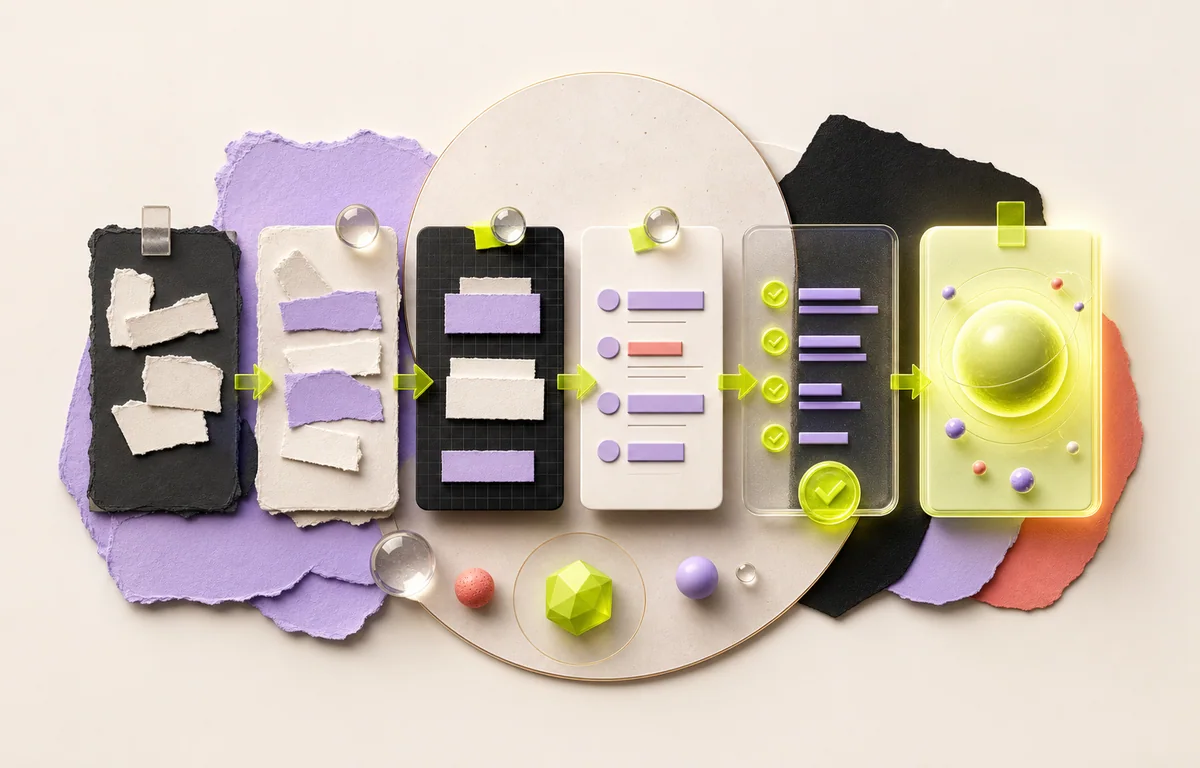
A list is not a workflow
Single prompts can spark ideas, but professional work rarely ends after one answer. Strong resources guide users through discovery, direction, production, refinement, and final review. Each step should prepare the information needed by the next.
Sequence matters because AI output is shaped by the decisions already made. A positioning prompt becomes more useful after audience research; an editing prompt becomes more useful after success criteria are defined.
Look for structured context
Quality prompts make the user supply the audience, goal, constraints, source material, tone, and desired format. Without those fields, even eloquent instructions tend to produce generic work.
Examples should demonstrate the level of specificity expected without forcing every user into the same style. The best packs explain what to customize and why.
- Clear input fields
- A logical order of operations
- Examples tied to real use cases
- Follow-up prompts for weak outputs
- A final quality checklist
Evaluate the output, not the wording
Long prompts are not automatically better. Judge a resource by whether it helps you reach a useful result with less uncertainty and fewer avoidable revisions.
Test a sample on a real project. If you cannot identify what changed, what decision the prompt supported, or how to improve the result, the prompt is decorative rather than operational.
Turn prompts into an asset
Save successful context and final outputs alongside the prompt. Note the conditions that produced the best result. That small feedback loop turns a purchased pack into a system tuned to your organization.
Revisit the pack as tools change, but preserve the underlying workflow. Good thinking patterns outlast any single model interface.